
Search engine optimization is no longer just about inserting keywords into a page or building random backlinks. In 2026, SEO is about relevance, authority, and user experience working together. That’s where the debate of On-Page vs Off-Page SEO becomes important.
If you want consistent rankings, sustainable traffic, and long-term brand growth, you need to understand how both strategies work — and why neither can succeed alone.
Let’s break it down in a simple, practical, and actionable way.
What Is On-Page SEO?
On-Page SEO refers to everything you optimize inside your website to improve search rankings and user experience. These are the elements you directly control.
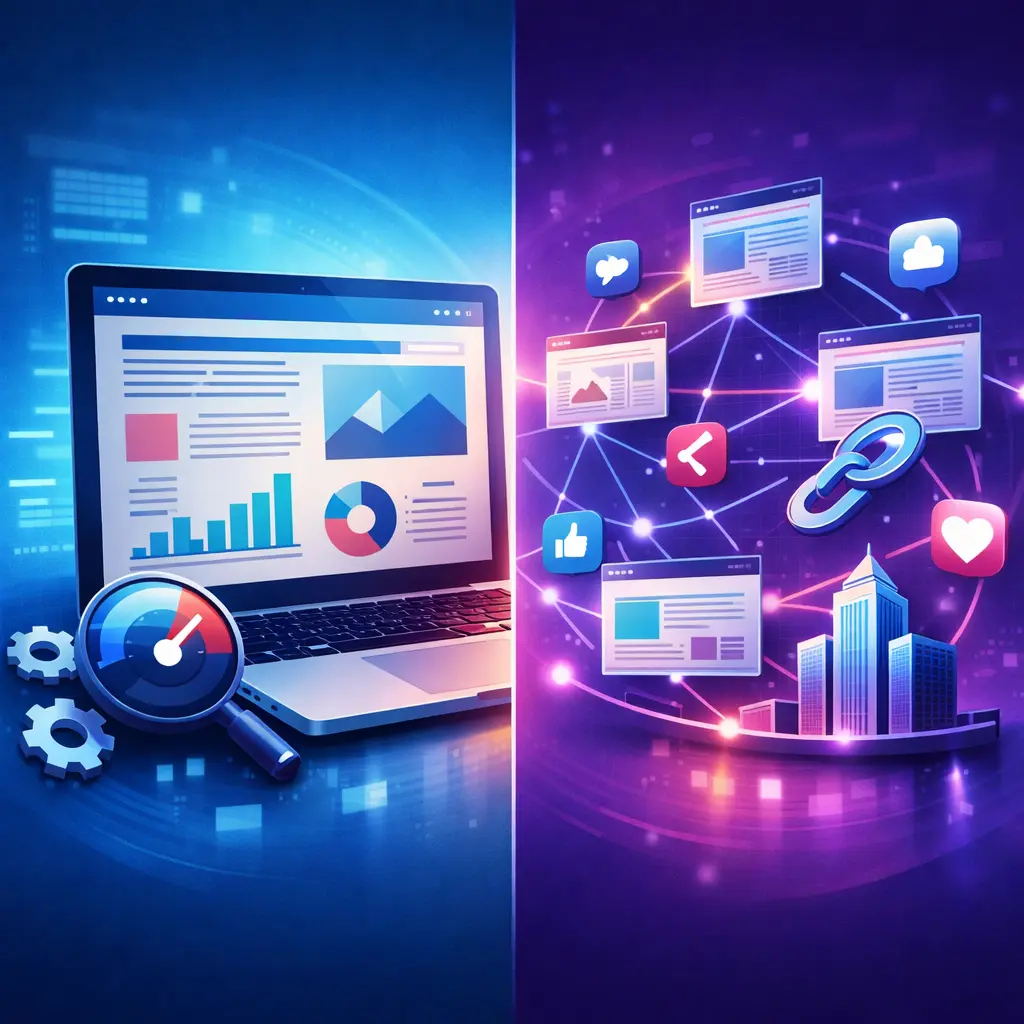
Think of on-page SEO as the foundation of your house. If the structure is weak, nothing else will stand strong — not even powerful backlinks.
Key Elements of On-Page SEO
1. High-Quality, Intent-Based Content
In 2026, search engines prioritize content that matches user intent. That means:
- Clear answers
- Structured headings
- Depth of information
- Real value, not fluff
Google’s AI systems analyze context, meaning, and user satisfaction — not just keywords.
2. Strategic Keyword Placement
Proper keyword usage still matters, but stuffing doesn’t work anymore. Your primary keyword should appear naturally in:
- Title tag
- H1
- First 100 words
- Subheadings
- URL
- Meta description
Semantic keywords and related phrases also help strengthen topical relevance.
3. Title Tags & Meta Descriptions
Your title tag influences rankings.
Your meta description influences clicks.
Higher click-through rates (CTR) signal search engines that users find your page valuable.
4. Internal Linking
Internal links:
- Distribute authority
- Improve crawlability
- Increase session duration
- Reduce bounce rate
Smart internal linking builds topical authority.
5. Technical & UX Optimization
Search engines now heavily weigh user experience signals:
- Page speed
- Mobile responsiveness
- Core Web Vitals
- Clean URL structure
- Secure HTTPS
A slow website in 2026 is a ranking killer.
What Is Off-Page SEO?
Off-Page SEO includes activities done outside your website to build trust, authority, and reputation.
If on-page SEO builds your house, off-page SEO tells the world that your house is worth visiting.
Key Elements of Off-Page SEO
1. Backlink Building
Backlinks remain one of the strongest ranking factors. But quality beats quantity.
A few authoritative, relevant backlinks are more powerful than hundreds of low-quality ones.
Search engines evaluate:
- Domain authority
- Relevance
- Anchor text
- Link placement
- Natural link patterns
2. Brand Mentions
Even unlinked brand mentions contribute to trust signals. When your brand is discussed across reputable platforms, it builds authority.
3. Digital PR
Guest posting, media coverage, and thought leadership boost both backlinks and brand credibility.
4. Social Signals
While not a direct ranking factor, social engagement increases visibility and often leads to organic backlinks.
5. Online Reputation
Reviews, citations, and local listings strengthen trust — especially for local SEO.
On-Page vs Off-Page SEO: Key Differences
| Factor | On-Page SEO | Off-Page SEO |
|---|---|---|
| Control | Fully in your control | Controlled by external sources |
| Focus | Relevance & user experience | Authority & trust |
| Speed of Impact | Faster results | Takes time |
| Core Goal | Help search engines understand your content | Prove your content is credible |
Both strategies serve different purposes — but they complement each other.
Why Both Matter in 2026
Search algorithms are more advanced than ever. AI-driven systems evaluate content quality, expertise, authority, and user engagement.
Here’s why both on-page and off-page SEO are critical in 2026:
1. Relevance Alone Is Not Enough
You may have perfectly optimized content, but without backlinks, search engines may not see your page as authoritative.
2. Authority Without Optimization Fails
If you have strong backlinks but poor content structure and weak user experience, rankings will drop.
3. EEAT Signals Are Stronger
Experience, Expertise, Authority, and Trust (EEAT) require:
- Strong content (on-page)
- Strong reputation (off-page)
4. Competitive SERPs Demand Both
In competitive industries, top-ranking pages always combine:
- Technical SEO
- Content depth
- Link authority
- Brand signals
There is no shortcut anymore.
Best Practices for On-Page SEO in 2026
- Create in-depth content (1000+ words where relevant)
- Use structured headings (H1, H2, H3)
- Optimize for featured snippets
- Add FAQ sections
- Improve page speed
- Use schema markup
- Focus on user engagement
Content should feel human, natural, and helpful — not robotic.
Best Practices for Off-Page SEO in 2026
- Build niche-relevant backlinks
- Avoid spammy directories
- Focus on digital PR
- Encourage brand searches
- Maintain consistent NAP (for local SEO)
- Monitor toxic backlinks
Authority building is a long-term investment, not a quick trick.
Which Is More Important?
The real answer: Neither is more important alone.
On-page SEO makes your content rank-worthy.
Off-page SEO makes your content trusted.
When combined, they create a compounding effect:
- Better rankings
- Higher traffic
- Stronger brand visibility
- Sustainable growth
Conclusion
The difference between On-Page vs Off-Page SEO isn’t about choosing one. It’s about understanding how both support your overall search strategy.
In 2026, successful websites focus on:
- User-first content
- Technical excellence
- Authoritative backlinks
- Strong brand signals
SEO is no longer just optimization — it’s digital credibility.
If you want consistent rankings and aim to position yourself as the best digital marketing agency in Gurgaon, you must invest in both strategies. Because relevance attracts search engines, but authority keeps you there.
FAQ
What is the main difference between On-Page and Off-Page SEO?
On-Page SEO focuses on optimizing elements within your website such as content, keywords, meta tags, and internal linking. Off-Page SEO involves external activities like backlink building, brand mentions, and digital PR that improve your website’s authority and trustworthiness.
Which is more important: On-Page SEO or Off-Page SEO?
Both are equally important. On-Page SEO helps search engines understand your content, while Off-Page SEO builds credibility and authority. Without strong on-page optimization, backlinks won’t perform effectively, and without off-page authority, content may struggle to rank.
How does On-Page SEO improve search rankings?
On-Page SEO improves rankings by optimizing keyword placement, improving content quality, enhancing user experience, increasing page speed, and ensuring proper technical structure. These factors help search engines evaluate relevance and usability.
Why are backlinks important in Off-Page SEO?
Backlinks act as votes of confidence from other websites. High-quality backlinks signal to search engines that your content is valuable and trustworthy, which can significantly improve your rankings.
How long does it take to see results from Off-Page SEO?
Off-Page SEO usually takes longer to show results compared to On-Page SEO. Depending on competition and strategy, noticeable improvements can take 3 to 6 months or more.